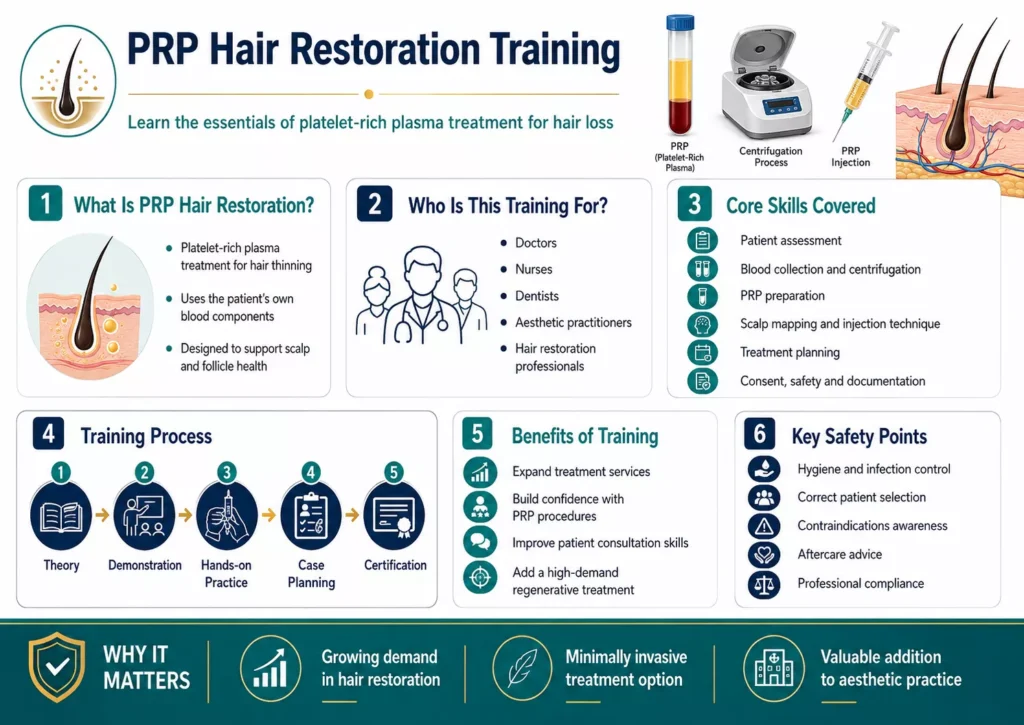
PRP hair restoration training is generally designed for medical, healthcare, hair restoration, and suitably qualified aesthetic professionals who want to add platelet-rich plasma treatments to their clinical or aesthetic services. Depending on the training provider, eligible candidates may include doctors, nurses, dentists, pharmacists, dermatologists, trichologists, aesthetic practitioners, skin specialists, qualified beauty therapists, microneedling practitioners, and professionals with phlebotomy experience.
However, being accepted onto a PRP course does not automatically mean someone can begin offering treatments independently. Professional registration, scope of practice, clinical governance, insurance requirements, and relevant practical skills must also be considered. Some providers may require registration with bodies such as the GMC, NMC, GDC, or GPhC, while non-medical applicants may need recognised beauty, anatomy and physiology, microneedling, or phlebotomy qualifications.
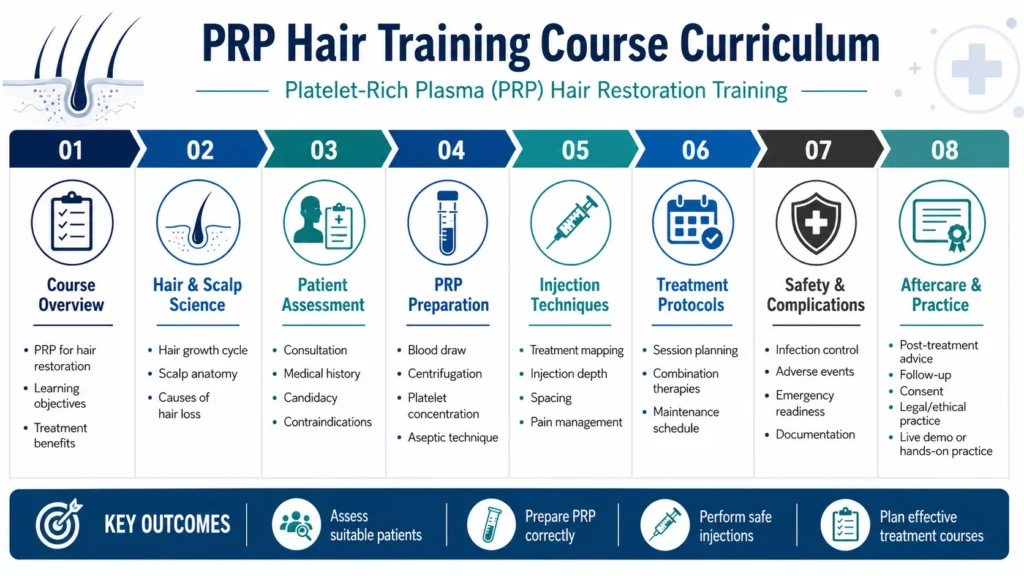
A good PRP hair restoration course should cover more than injection technique. Training typically includes PRP and PRF theory, patient assessment, treatment planning, blood handling, practical administration, safety procedures, clinical judgement, and realistic patient communication. Hands-on supervised experience is especially important for building competence and confidence.
For that reason, the right candidate is not simply someone interested in hair restoration. It is someone with an appropriate professional foundation who can meet the course provider’s entry requirements and practise safely, responsibly, and within the limits of their qualification and professional role.
What Is PRP Hair Restoration Training?
PRP hair restoration training is a comprehensive educational program designed to equip practitioners with the scientific knowledge and practical skills necessary to offer Platelet-Rich Plasma therapy.
A recognised training course typically includes the following components:
- In-depth theoretical instruction on the science and practice of PRP and PRF treatments.
- Practical training focused on patient selection and the intricacies of administering injections.
- Supervised clinical experience to ensure mastery of cutting-edge techniques and adherence to best practices.
- Essential training modules required for professional insurance approval and aesthetic practice integration.
Can Doctors Take PRP Hair Restoration Training?
Doctors can take PRP hair restoration training, and completing a specialised course is a requirement for them to perform the procedure safely and legally. While a medical degree provides the necessary background, it is not sufficient on its own; practitioners must undergo specific training to elevate their skills in the hair restoration industry. Many programs are designed specifically for medical practitioners and require proof of professional registration during the enrollment process.
The types of medical professionals eligible for this training include:
- GMC-registered doctors
- General Practitioners (GPs)
- Foundation and hospital doctors
- International doctors with valid UK registration
- Other healthcare professionals and aestheticians looking to expand their clinical expertise
Can Nurses Take PRP Hair Restoration Courses?
Nurses can take PRP hair restoration courses and perform the procedure, provided they meet specific professional and regulatory requirements. To successfully incorporate Platelet Rich Plasma therapy into their practice, nurses must typically adhere to the following conditions:
- Maintain active registration with a professional body, such as the Nursing and Midwifery Council (NMC) in the UK.
- Complete a structured and comprehensive PRP training course designed for healthcare professionals.
- Operate under appropriate clinical governance and follow all local prescribing rules.
- Ensure clinical oversight is in place, as it may still be required even when the procedure does not specifically require a prescription.
PRP training courses are specifically designed for medically qualified individuals, including nurses, doctors, dentists, and surgeons, as well as other professionals looking to elevate their skills or start a new career in the hair restoration industry.
Can Dentists Train in PRP Hair Restoration?
Dentists can train in PRP hair restoration because their medical expertise in anatomy, injection techniques, and facial structures provides a strong foundation for performing Platelet-Rich Plasma therapy. While dentists, dental hygienists, and dental nurses are eligible for this training, they must adhere to specific professional requirements, which include:
- Completing a recognised or Level 4 accredited PRP and PRF training course.
- Staying within their professional scope of practice.
- Securing appropriate insurance for aesthetic and hair restoration procedures.
- Using the treatment to promote hair loss reduction, skin rejuvenation, and oral or facial healing.
What About Pharmacists and Other Healthcare Professionals?
Pharmacists and other healthcare professionals work daily alongside doctors, nurses, allied health professionals, and healthcare scientists to deliver evidence-based care within their local communities.
Their roles and professional requirements include the following:
- Applying extensive pharmacy knowledge to make a positive difference in the health and wellbeing of the public.
- Demonstrating adherence to nine specific standards required to join the professional register and be deemed fit to practice.
- Utilising scientific evidence to ensure the delivery of high-quality care to patients.
- Referring patients to a GP or another appropriate healthcare professional if they are unable to provide the necessary help themselves.
Can Aesthetic Practitioners Take PRP Hair Restoration Training?
Aesthetic practitioners can take PRP hair restoration training if they hold current professional registration and meet specific eligibility requirements. While many advanced courses are designed for medical practitioners and require proof of registration during enrollment, training is often accessible to various professionals, including:
- Aesthetic practitioners and skin specialists
- Medical and healthcare professionals
- Beauty therapists
- Microneedling and phlebotomy-trained practitioners
Depending on the specific role and workplace setting, some practitioners may also require additional governance or supervision to complete their training and practice PRP hair restoration.
Can Beauty Therapists Take PRP Training?
Beauty therapists can take PRP training provided they meet specific professional criteria, as the procedure is a medical treatment involving blood handling, injections, and clinical judgment rather than a simple cosmetic add-on. Because PRP is a common progression route for professionals moving into advanced skin and aesthetics treatments, candidates must typically satisfy one of the following requirements to enrol:
- Hold a Level 3 NVQ in Beauty Therapy.
- Have 6 months of experience in advanced beauty treatments (such as SPMU, microblading, or microneedling) along with a Level 3 qualification in Anatomy and Physiology (A&P).
- Possess 12 months of experience in advanced beauty treatments.
- Be a medical professional registered with a recognised body such as the NMC, GMC, GDC, or GPhC.
Do You Need Previous Injection Experience?
You do not necessarily need previous injection experience to receive PRP therapy, as these treatments utilise a patient’s own tissues and are safe to be administered alone or in conjunction with other procedures. While not a strict requirement, PRP injections are often suggested or managed based on the following clinical factors:
- Whether a patient has previously tried alternative treatments, such as physiotherapy, pain medications, or steroid injections, without achieving significant or long-lasting relief.
- A patient’s goal to delay or avoid surgical intervention.
- The severity and duration of the condition, as advanced or long-standing issues may require follow-up injections to achieve sustained results.
- The patient’s activity level and specific treatment goals, such as reducing inflammation or improving joint function.
Do You Need Phlebotomy Skills?
The phlebotomy skills you need involve a combination of technical precision, administrative competence, and strong interpersonal qualities to ensure patient safety and comfort. Even for those who do not directly take blood samples, having a foundational understanding of phlebotomy is considered good practice in health and social care to support colleagues and help patients navigate the testing process.
The specific skills and attributes required for phlebotomy include:
- Strong interpersonal traits such as being caring, kind, sensitive, and patient to put anxious patients at ease.
- Excellent communication skills to explain procedures clearly to patients and a proficiency in the English language.
- The ability to follow instructions and methodical procedures precisely while paying close attention to detail.
- The ability to work well within a team while also using your own initiative.
- Emotional resilience and the ability to remain calm in stressful situations.
- Administrative and basic computer skills to carry out tasks on digital devices and manage patient records.
- A hands-on approach and a genuine desire to help people in a healthcare setting.
Is PRP Training Suitable for Hair Restoration Professionals?
PRP training is suitable for hair restoration professionals because it equips a wide range of practitioners with the essential hands-on practice, safety knowledge, and clinical confidence needed to meet the rapidly growing demand for non-surgical hair care treatments. By completing a course from an accredited provider, professionals can either elevate their existing skills or establish a new career in the thriving field of aesthetic medicine.
The target audience for PRP and PRF training includes various specialists within the hair restoration and medical industries, such as:
- Dermatologists and trichologists
- Aesthetic practitioners and aestheticians
- Barbers and hair care professionals
- Healthcare and medical professionals looking to expand their expertise in non-surgical hair restoration
Who Should Consider Taking PRP Hair Restoration Training?
PRP hair restoration training should be considered by a wide range of medical and aesthetic professionals seeking to expand their expertise in the growing field of non-surgical hair care. This training is specifically tailored for those who want to provide advanced aesthetic treatments and require procedural certification to complement their clinical foundation.
The individuals who should consider this training include:
- Medical professionals, including doctors, dentists, nurses, pharmacists, and dermatologists.
- Aesthetic practitioners, skin specialists, and trichologists focused on aesthetic medicine.
- Allied health professionals and other healthcare workers looking to build on their clinical foundation.
- Beauty therapists and microneedling practitioners.
- Phlebotomy-trained learners.
- Individuals eager to progress into advanced aesthetics or expand their practice in non-surgical hair care and aesthetic medicine.
What Should You Check Before Enrolling?
Before enrolling in PRP therapy, you should check several key factors during a comprehensive consultation to ensure the treatment is safe and appropriate for your needs, including:
- Your medical history, specifically looking for contraindications such as bleeding disorders or the use of blood-thinning medications.
- The current condition of your scalp and hair to rule out active infections or skin disorders.
- The extent of your hair loss and which specific areas are most suitable for treatment.
- A clear understanding of how the procedure works and any potential risks associated with it.
- Realistic expectations for the results based on a professional assessment.
- A list of relevant questions to ask your healthcare provider to help you make an informed decision.
Who Should Not Rush Into PRP Training?
Those who should not rush into PRP training or treatment are individuals with specific medical conditions or risk factors that may reduce the safety and effectiveness of Platelet-Rich Plasma therapy. While PRP is beneficial for many orthopaedic and sports injury patients, it is not appropriate for everyone and requires a careful pre-application check of contraindications, medications, and laboratory values.
According to medical guidelines, the following individuals are generally not considered suitable candidates for PRP therapy:
- Individuals with an active infection at the injection site or elsewhere in the body.
- People with significant blood disorders, low platelet counts, or severe anaemia.
- Patients with certain types of cancer or uncontrolled diabetes.
- Individuals with autoimmune diseases that negatively affect the body’s ability to heal.
- Those currently using blood thinners that cannot be safely discontinued.
- Women who are pregnant or breastfeeding.
- Patients with uncertain clinical conditions, comorbidities, or laboratory values that require clarification from a specialist before proceeding.
Choosing the Right PRP Hair Restoration Course
Choosing the right PRP hair restoration course involves selecting a professional training program that provides comprehensive theory and practical application to ensure expertise in non-surgical hair loss treatments. When evaluating potential certification programs to enhance your practice and stay competitive in aesthetic medicine, it is essential to consider the following factors:
- Ensure the course is medically focused and led by qualified instructors.
- Look for programs that include hands-on training and a practical element, avoiding courses that are online-only.
- Verify that the curriculum covers both Platelet-Rich Plasma (PRP) and Platelet-Rich Fibrin (PRF).
- Confirm that the course provides certification recognised by professional insurers.
- Check for clear enrollment requirements to ensure the training is designed for medical professionals and aesthetic practitioners.
PRP Training Is About More Than Learning a Procedure
PRP training is about more than learning a procedure because it provides a comprehensive foundation that integrates theoretical biology, regulatory knowledge, and clinical judgment with practical application. Rather than simply teaching a technique, professional Platelet-Rich Plasma (PRP) and Platelet-Rich Fibrin (PRF) courses build upon a practitioner’s existing medical knowledge to ensure they understand the underlying “why” of each step, rather than just the “how.”
A well-designed training program ensures that practitioners can use PRP responsibly and effectively through the following elements:
- Foundational Knowledge: Acquiring a deep understanding of biology and regulatory requirements to ensure treatments are performed responsibly and documented defensibly.
- Clinical Judgment: Developing the expertise necessary to communicate honestly with patients about treatment expectations and outcomes.
- Flexible Learning Models: Utilising online theory to front-load essential concepts, which then anchor hands-on practical skills in the correct clinical context.
- Professional Growth: Enhancing existing medical backgrounds to foster a holistic understanding of non-surgical, anti-ageing treatments within a medical aesthetic environment.
Final Thoughts
PRP hair restoration training can be a valuable next step for medical, healthcare, hair restoration, and suitably qualified aesthetic professionals who want to expand into non-surgical hair loss treatments. Doctors, nurses, dentists, pharmacists, dermatologists, trichologists, aesthetic practitioners, beauty therapists, microneedling practitioners, and phlebotomy-trained learners may all be eligible, depending on the course provider’s entry requirements.
However, completing a course is only one part of becoming a competent PRP practitioner. Professional registration, scope of practice, insurance, clinical governance, phlebotomy or injection competence, and hands-on training all play an important role. A strong course should therefore teach not only how to perform PRP, but also how to assess patients, manage safety, understand PRP and PRF science, communicate realistic expectations, and make sound clinical decisions.
The key is to choose training that matches your professional background and provides recognised certification, qualified instruction, and practical experience. When these elements are in place, PRP training can help practitioners build the knowledge and confidence needed to offer hair restoration treatments responsibly and within the boundaries of their professional role.
Frequently Asked Questions
Do you have to be a doctor to take PRP hair restoration training?
Not always. Depending on the training provider and local regulations, nurses, dentists and other suitably qualified healthcare professionals may also be eligible.
Can nurses perform PRP hair treatments?
Qualified nurses may be able to provide PRP treatments where their professional scope, local regulations and insurance allow it.
Can non-medics take PRP training?
Eligibility varies considerably. Because PRP involves blood collection and injectable procedures, many reputable courses require an appropriate healthcare or medical qualification.
Do you need phlebotomy training before PRP training?
It depends on your existing skills and the course requirements. Practitioners performing PRP should be competent in safe blood collection.
Is PRP hair restoration training difficult?
The procedure can be learned with structured education and supervised practice, but competent PRP treatment also requires understanding patient selection, scalp anatomy, hair loss, infection control and complications.
Can I offer PRP treatments immediately after completing a course?
A training certificate alone may not be enough. You must also satisfy professional scope-of-practice requirements, local regulations, clinic governance requirements and insurance conditions.
Is PRP training useful for an aesthetic clinic?
For appropriately qualified practitioners, PRP hair restoration can complement existing aesthetic, regenerative medicine and hair-loss services.
What qualifications should I check before booking PRP training?
Check the provider’s entry requirements and confirm that your current professional qualification allows you to obtain appropriate insurance and legally perform the treatment in your location.